- Your cart is empty
- Continue Shopping

Say Goodbye to Dirty Water: The Ultimate Guide to Overhead Tank Bag Filters
Have you ever opened your tap only to see yellowish, muddy, or rusty water filling your sink? Or noticed a thick layer of sludge settled at the bottom of your overhead water tank?
Whether your water supply comes from a municipal pipeline, borewell, or water tanker, sediment contamination is a widespread issue in Indian households. Leaving this water unfiltered not only makes daily chores unpleasant but also damages expensive plumbing fixtures, clogs geysers, and shortens the lifespan of your kitchen RO systems.
The smart, cost-effective solution? Installing a Bag Filter for your Overhead Tank.
In this comprehensive guide, we’ll explore how bag filters work, why every home needs one, and how to choose the right system for your property.
What is a Bag Filter for an Overhead Tank?
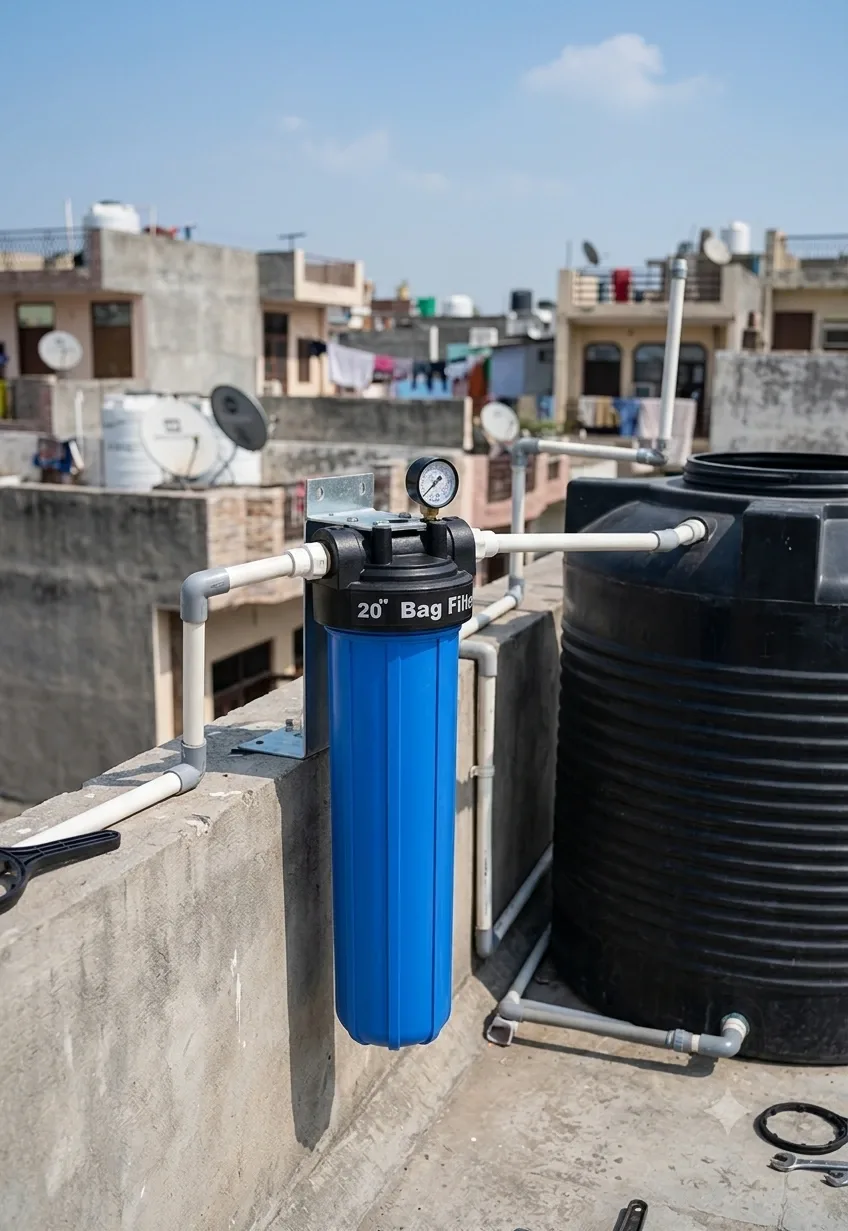
A Bag Filter for an overhead tank (also called a Whole House Sediment Filter) is a high-capacity filtration unit installed directly on the main water inlet pipeline before water enters your rooftop tank.
Unlike traditional mesh filters that clog quickly, a bag filter system utilizes a heavy-duty housing (typically polypropylene or stainless steel) containing a micro-denier fabric filter bag. As water flows through under pressure, solid suspended impurities as small as 5 microns are trapped inside the bag, allowing only crystal-clear water to store in your overhead tank.
[ Water Source / Motor Pump ] ──► [ Bag Filter Unit ] ──► [ Clean Water into Overhead Tank ]
Top 5 Benefits of Installing a Bag Filter on Your Rooftop Tank
1. Keeps Stored Water Mud & Rust-Free
Water carrying sand, clay, rust flakes, and organic matter gets trapped at the entry point. Your overhead tank stays sparkling clean, meaning you won’t have to drain and scrub your tank every few months.
2. Washable & Reusable Filter Bags (Zero Ongoing Expenses)
Unlike standard disposable cartridge filters that require frequent replacements, quality filter bags are washable. When dirty, simply remove the bag, rinse out the accumulated mud under a running tap, and reinsert it.
3. High Water Flow Rate with Minimal Pressure Loss
One major advantage of bag filtration over heavy media filters is its high flow rate capability. It handles high-gallon pumps (1 HP / 2 HP motors) effortlessly without dropping your home’s tap water pressure.
4. Protects Plumbing, Geysers & Appliances
Sediment buildup is the leading cause of leaking taps, clogged showerheads, scaled water heaters, and washing machine failure. Filtering water before it enters your home’s piping network extends appliance longevity significantly.
5. Enhances RO Purifier Performance
By taking away the heavy load of suspended solids before water reaches your kitchen RO system, your pre-filters and membranes last up to 2x longer, cutting down maintenance costs.
Comparison: Bag Filter vs. Traditional Cartridge Filters
| Feature | Bag Filter System | Standard Spun/Cartridge Filter |
| Filter Media | Heavy-duty Washable Fabric Bag | Disposable Polypropylene Spun |
| Maintenance | Wash & Reuse multiple times | Must throw away when clogged |
| Dirt Holding Capacity | Very High (Ideal for heavy mud) | Moderate to Low |
| Flow Rate Capability | High (Up to 1 HP–2 HP motors) | Lower flow rate |
| Cost Efficiency | High (Long-term savings) | Recurring cartridge buying costs |
How to Install an Overhead Tank Bag Filter
Installation is straightforward and can be easily handled by any local plumber in under an hour:
- Choose the Right Location: Install the filter unit on the main delivery pipe coming from your motor/borewell pump, before the pipe reaches the top opening of your overhead tank.
- Mount the Housing securely: Use a heavy-duty mounting bracket to fix the filter housing to a rooftop wall or support structure.
- Plumb the Connections: Connect the 1-inch (or 1.5-inch) inlet and outlet ports using standard UPVC/CPVC fittings with bypass valves for easy maintenance.
- Insert the Filter Bag & Seal: Drop the washable bag into the casing, tighten the top lid with the provided spanner wrench, and turn on the pump to check for leaks.
How Often Should You Clean the Filter Bag?
Cleaning frequency depends on your incoming water quality:
- Municipal Water Supply: Wash every 1–2 months.
- Borewell or Tanker Supply: Wash every 2–4 weeks (or whenever you notice reduced flow).
💡 Pro-Tip: Keep a spare filter bag on hand! When it’s time to clean, swap in the fresh bag immediately and wash the dirty one at your convenience so your water supply is never interrupted.
Frequently Asked Questions (FAQ)
Q1. Does a bag filter reduce TDS (Total Dissolved Solids) in water?
No. Bag filters are sediment filters designed to trap physical suspended particles like sand, rust, silt, and mud. To lower TDS or dissolved salts, you will still need a drinking water RO purifier at your tap.
Q2. Can a bag filter withstand high water pressure from a motor pump?
Yes. Heavy-duty jumbo bag filter housings built from reinforced food-grade polypropylene or stainless steel are engineered to handle high operational pressures from standard 1 HP and 2 HP residential pumps.
Q3. Can I use a bag filter for borewell water?
Absolulely. Borewell water usually carries higher concentrations of fine sand and mud, making bag filters one of the best pre-filtration methods available.
Ready to Upgrade Your Home’s Water Quality?
Don’t let mud and sediment damage your health and home plumbing. Investing in a high-quality whole-house bag filter system is one of the most practical upgrades you can make for your property.
🛒 Explore Purity India’s Range of Whole House & Overhead Tank Filters
Click Here to View Products & Pricing or drop us a message on WhatsApp for custom installation support!